
AI Approach
Experience with: ChatGPT, Claude, Gemini, GrammarlyGO, Lumo, Midjourney, Toquan, Writer.
I’ve also helped train AI models for Fortune 500 companies with Outlier.ai.
Image: Steve Johnson
AI and LLM tools are here to stay, but I encourage a thoughtful approach to how we use them.
AI can help us brainstorm, code, research, get unstuck, write a first draft, or get through a tedious task. We may also be able to set up agentic workflows that automate complex processes and reduce busywork. But there are also situations where they may not save as much time as we think. The effort you spend editing the output can sometimes be better spent thinking, writing, and putting your audience’s needs first. It’s about learning what saves you time and what doesn’t.
Here are some examples of how we can use AI/LLMs in copywriting.
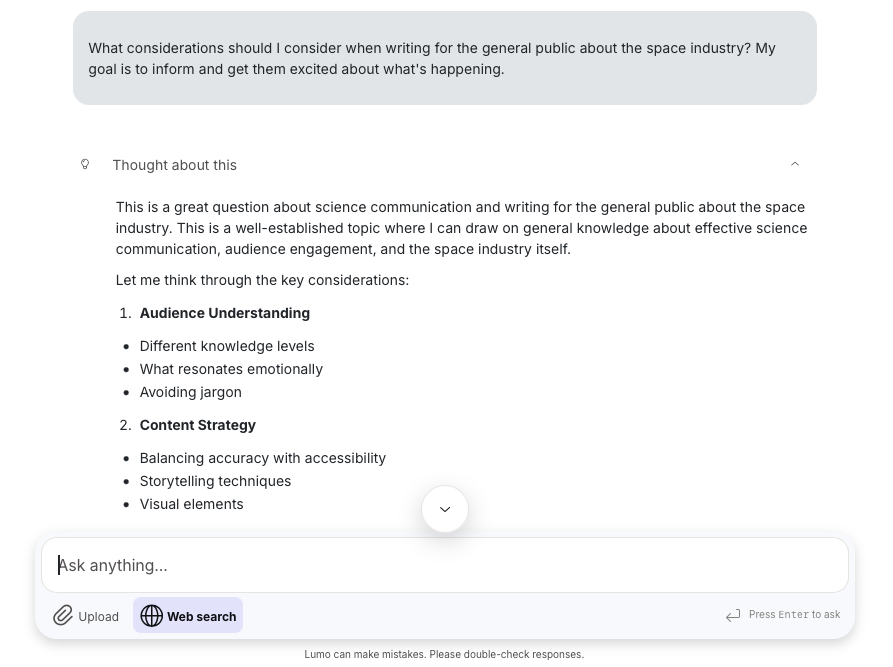
An example of researching how to write for a new audience.

An example of engaging an LLM to help brainstorm ideas for social media posts. Now your job is to make them better, using your expertise.
Agentic workflows
There may also be opportunities to use agentic workflows that focus on specific areas.
Strategy and Research: An autonomous researcher agent can assess competitor websites, analyzes current market trends, and make suggestions on how to differentiate yourself.
Planning and Structuring: A strategist agent can help create design briefs and establish constraints based on your brand’s voice and tone.
Drafting: A prose writer agent can generates the copy with the desired formatting, persuasive hooks, and CTAs.
Review and Refinement: An editor agent independently checks for SEO compliance and readability, rewriting weak areas before a human issues final approval.
We must also consider the homogeneity of our communications when everyone is using these tools. If our goal is to connect with a human audience, how do we stand out? Even detailed prompts or workflows could still use a human touch.
A skilled writer shouldn’t need to create every first draft using these models, much like an experienced coder doesn’t need these tools to produce every line of code. But there are times when it can ease your demands, or when the communication doesn’t call for you to go through your full process.
I prefer a balanced approach and having ongoing discussions about what may and may not be the best use for these tools. Organizations need a strategy that goes beyond blindly using them.
I can help guide those conversations and put the focus on delivering value and ROI.